

From Ali G and Borat to Brüno, the groundbreaking comedian and actor explores the creative genius, cultural impact, and fearless philosophy behind some of entertainment’s most unforgettable characters.
Few entertainers have challenged social conventions, pushed comedic boundaries, and sparked global conversations quite like Sacha Baron Cohen.
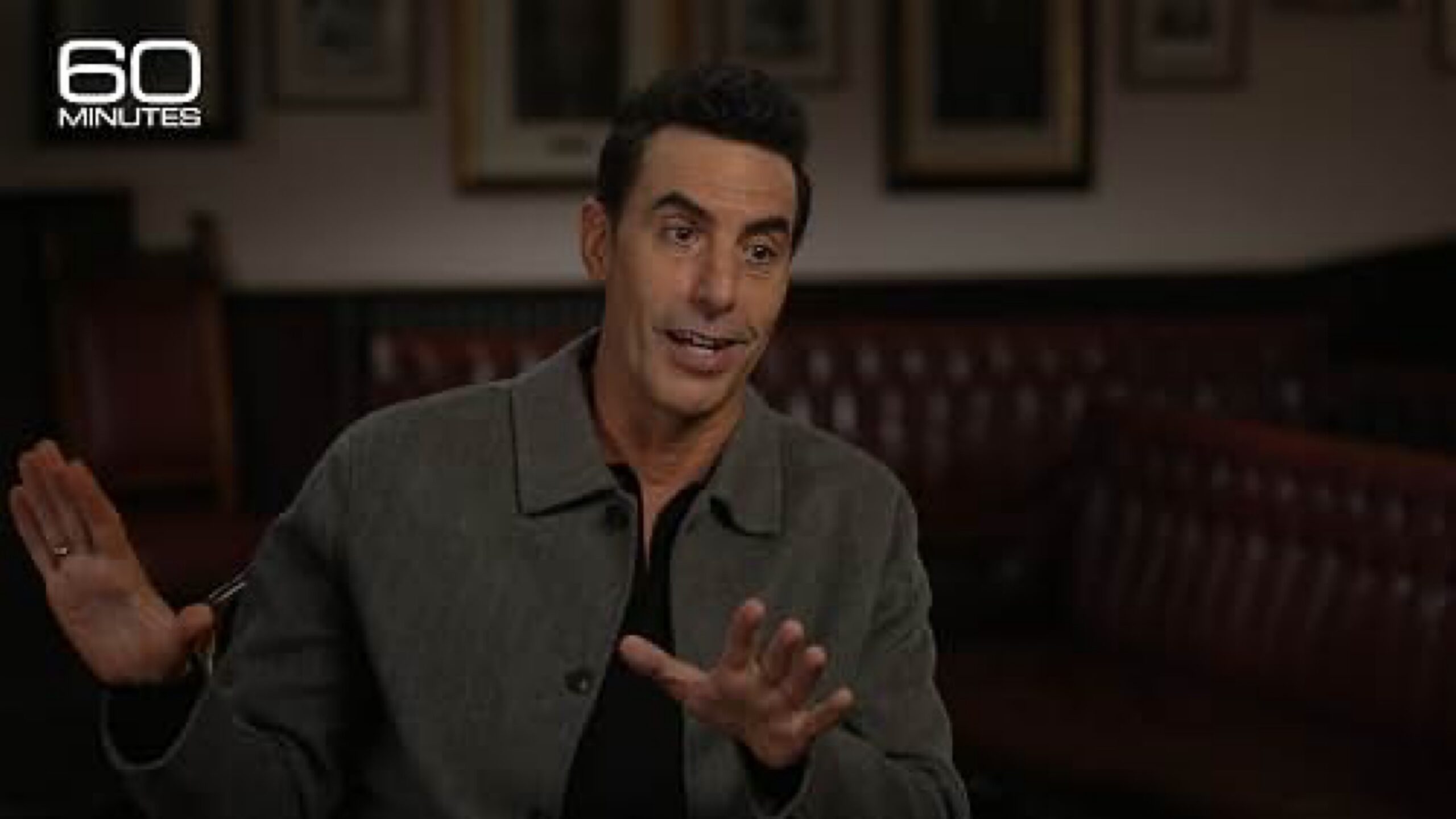
Known for transforming outrageous fictional personalities into powerful instruments of satire, the award-winning comedian, actor, writer, and producer takes audiences behind the scenes of his remarkable career in an extended interview with 60 Minutes.
Throughout the revealing conversation, Baron Cohen reflects on his evolution from an ambitious young performer experimenting with unconventional comedy to becoming one of the most recognizable and controversial figures in modern entertainment. With a career built on fearless improvisation, elaborate disguises, and an extraordinary ability to expose uncomfortable truths through humor, he offers insight into the creative philosophy that has defined his work for decades.
At the center of the discussion are three characters who forever changed the landscape of comedy: Ali G, Borat Sagdiyev, and Brüno Gehard.
Through Ali G, the hilariously misguided wannabe gangster and interviewer, Baron Cohen introduced audiences to a unique brand of comedy that blurred the lines between reality and performance. By placing an absurd fictional personality opposite unsuspecting politicians, celebrities, and influential public figures, he created unforgettable exchanges that often revealed more about his subjects than traditional interviews ever could.
His creative ambitions reached extraordinary new heights with Borat, the fictional Kazakh journalist whose outrageous adventures became a worldwide cultural phenomenon. The character’s combination of social awkwardness, offensive misconceptions, and relentless curiosity allowed Baron Cohen to explore subjects including prejudice, politics, cultural misunderstandings, and the contradictions of modern society.
The success of Borat: Cultural Learnings of America for Make Benefit Glorious Nation of Kazakhstan established Baron Cohen as a groundbreaking cinematic comedian, earning widespread recognition while generating intense conversations about the ethical boundaries of satire.
He would later revisit the character in Borat Subsequent Moviefilm, demonstrating how his particular brand of comedy could adapt to changing political climates and evolving social attitudes.
Meanwhile, Brüno, the flamboyant Austrian fashion journalist, provided another platform for Baron Cohen to examine celebrity obsession, superficiality, sexuality, and the entertainment industry’s fascination with fame. Through increasingly outrageous encounters, the character challenged audiences to consider the uncomfortable relationship between public perception, personal identity, and social acceptance.
Beyond the memorable costumes, accents, and unpredictable interactions, the 60 Minutes interview explores the artistic discipline required to bring these larger-than-life personalities into the real world.
Baron Cohen’s approach to comedy extends far beyond delivering a punchline. His performances rely on extensive character development, psychological observation, improvisational instincts, and the ability to maintain an elaborate fictional identity under unpredictable circumstances.
What appears effortless on screen often represents a carefully constructed creative experiment designed to reveal authentic human behavior.
The extended conversation also examines the broader purpose behind Baron Cohen’s work and the complicated relationship between comedy and controversy. His characters frequently operate in uncomfortable territory, forcing viewers to confront questions about stereotypes, ignorance, hypocrisy, and the limits of acceptable humor.
For Baron Cohen, satire has become more than entertainment. It serves as a provocative form of social commentary, using laughter to challenge assumptions and encourage audiences to examine the world around them from a different perspective.
His career has also extended beyond his signature undercover comedy, with acclaimed performances in dramatic productions and major Hollywood films demonstrating his versatility as an entertainer.
From his work in The Trial of the Chicago 7 to appearances in Hugo, Les Misérables, and other notable projects, Baron Cohen has continually expanded his artistic identity while maintaining the creative fearlessness that first made him a household name.
As the entertainment industry continues to evolve in an era of social media, heightened public scrutiny, and rapidly changing cultural expectations, his influence on comedy remains undeniable.
For aspiring comedians, filmmakers, and creative storytellers, the interview offers an opportunity to better understand the imagination, commitment, and unconventional thinking required to build characters capable of transcending entertainment and becoming part of popular culture.
Ultimately, this extended 60 Minutes conversation provides a fascinating look at the man behind the disguises, revealing how Sacha Baron Cohen transformed fearless character comedy into a distinctive artistic legacy.
Whether audiences first discovered him through Ali G’s ridiculous interviews, Borat’s unforgettable American adventures, or Brüno’s outrageous encounters with celebrity culture, one thing remains certain: Sacha Baron Cohen has never been interested in simply making people laugh. His comedy challenges audiences to question exactly why they’re laughing in the first place.
Watch the extended Sacha Baron Cohen interview on 60 Minutes for an exploration of his legendary characters, creative process, and extraordinary journey through the world of comedy and entertainment.


