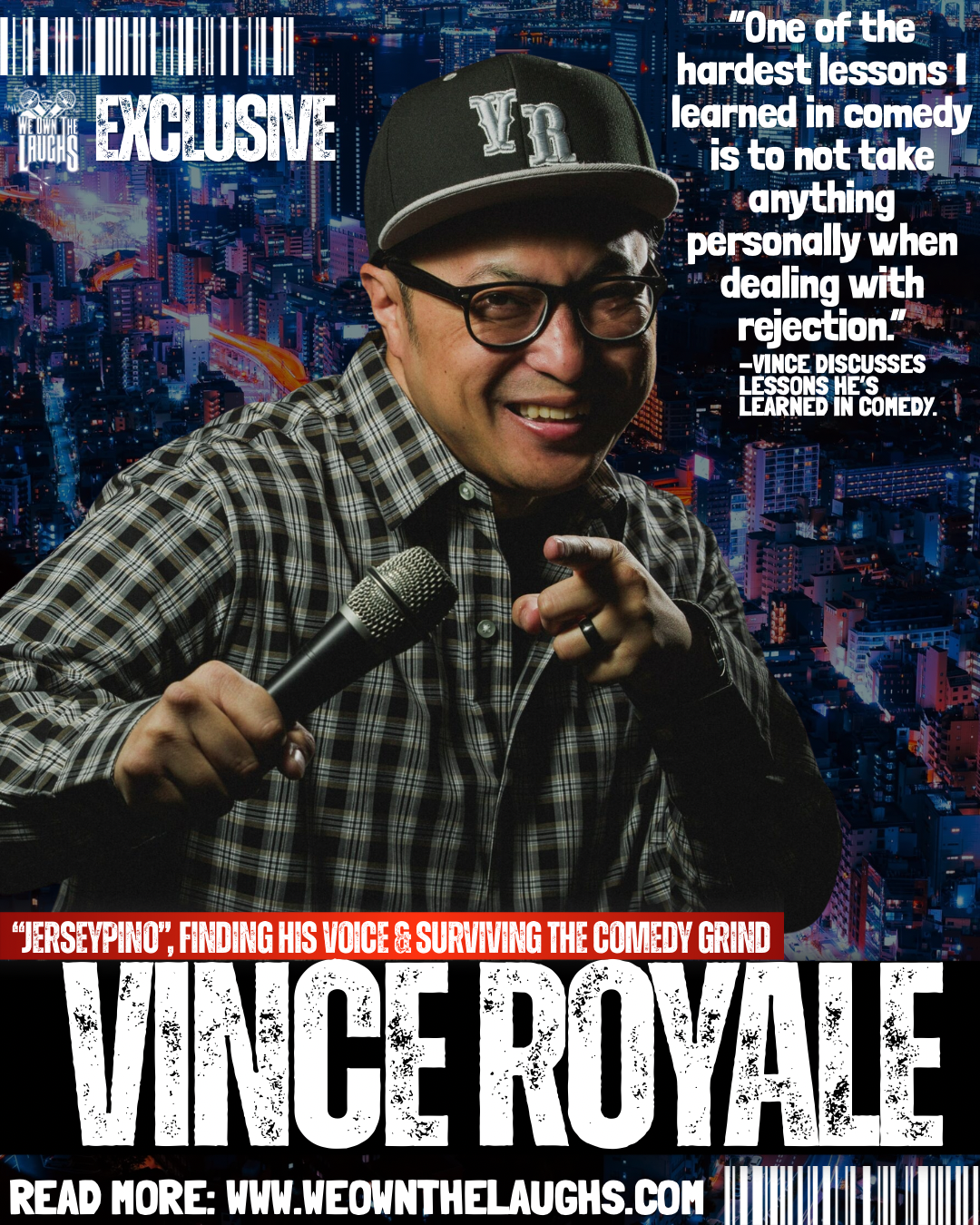
Eighteen years is a long time to wait for anything—especially when you’ve spent most of those years standing under bright lights trying to make strangers laugh. But for Vince Royale, the road to his debut comedy special Jerseypino wasn’t about waiting for permission. It was about waiting until the comedian onstage fully sounded, looked, and felt like Vince Royale.
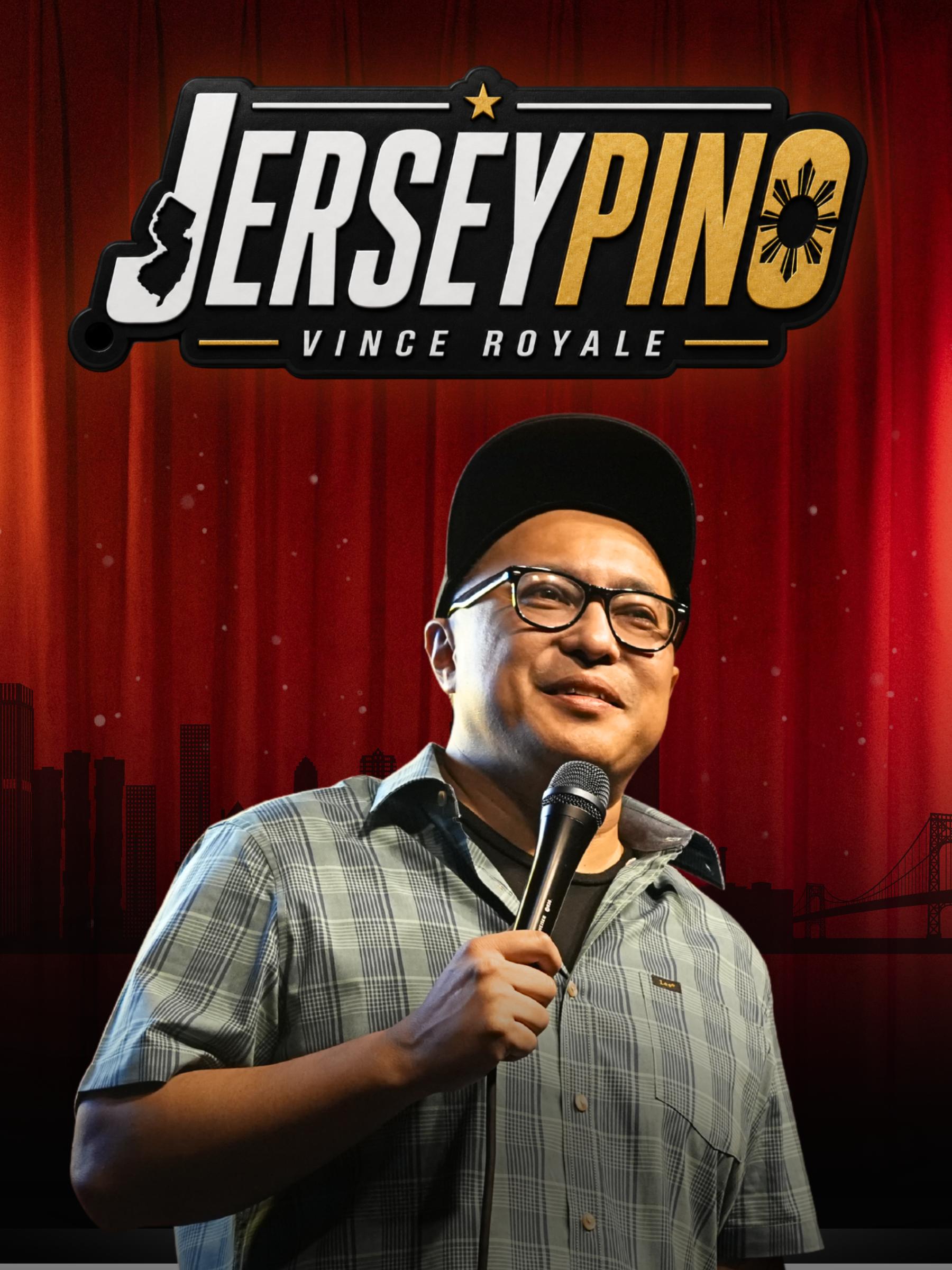
Born and raised in Jersey City before building his comedy career in Los Angeles, Royale has spent nearly two decades sharpening a style shaped by East Coast honesty, West Coast experience, life on the road, and the unmistakable perspective of his Filipino-Jersey upbringing. Even the title Jerseypino came organically, coined after fellow comedian Vince Morris described Royale’s comedy as that of “a Filipino guy from Jersey.” The name stuck because, in Royale’s words, it simply captured his Jersey-Filipino upbringing.
Produced with Laugh After Dark, Jerseypino represents far more than Royale finally putting a special into the world. It’s the culmination of 18 years of material, evolving delivery, countless stages, rejection, experimentation, and learning to let go of the perfectionism that kept him from filming sooner. Royale describes the finished project as an opportunity for audiences to experience a more polished version of his art while still capturing the authenticity and unpredictability of a live performance. And Royale has plenty to say about where comedy is headed next. From viral clips and crowd work to influencers filling comedy clubs, the importance of professionalism, surviving rejection, building an audience, and whether artificial intelligence could eventually come for the stage itself, Royale views modern comedy through the eyes of someone who remembers when television credits mattered more than follower counts—and has successfully adapted to both worlds.
In an exclusive conversation with We Own The Laughs founder Tyson Paul, Vince Royale opens up about the long road to Jerseypino, finding his authentic comedic voice, navigating the business behind the laughs, watching his wife Ciara Royale pursue stand-up, the changing state of comedy in 2026, and why finally releasing his first special doesn’t feel like the end of an 18-year journey.
It feels like the beginning of the next one.
“Jerseypino” is such a specific title that it immediately tells us there’s a story behind it. What does “Jerseypino” mean to Vince Royale, and when did you realize it was the right title for this project?
It took me a while to figure out what to name my first comedy special. I struggled for weeks. I wanted a one-word title like Eddie Murphy’s “Raw” or “Delirious. A few months ago, I was working with a fellow headlining comedian, Vince Morris from Ohio. We were hanging out after a show, and I asked him what comes to mind when watching my style of comedy, describing a Filipino guy from Jersey. He said, “Jerseypino”. I thought it was brilliant. It simply described my Jersey-Filipino upbringing. So shout-out to my dude Vince Morris for helping me coin the phrase.
You’re a Jersey City native who eventually built your career in Los Angeles. How much of Jerseypino is about the person you were growing up in Jersey versus the person you became after moving to LA?
Jerseypino tells a part of my story and the struggles of moving to Los Angeles, learning to navigate a new city, and finding comedy in an unfamiliar place. Growing up in Jersey City made me stick out like a sore thumb in So Cal, but I used my unique perspective to tell a story through comedy. Even though my comedy developed in LA, I knew that I had to travel and hit different cities to learn how to adapt to different audiences.
When you listened back to the finished album, was there anything that surprised you about how much your comedy has changed over the years?
I’m very happy with the finished product. Even though it took 18 years to release a comedy album and comedy special, I’m glad I waited so the audience gets to experience a more polished version of my art. I’m definitely surprised at how my comedy has changed. Sometimes I watch clips from 18 years ago, or even 5 years ago, and see how my ideas and jokes have evolved. My delivery and execution are way better than they were when I started.
Laugh After Dark played a major role in producing your debut special. What made them the right partner to help bring Jerseypino to life?
I’ve followed Laugh After Dark for years and appreciate their quality content. Last year, I was accepted to perform at their annual Laugh After Dark ComedyFest, received great feedback, and even won an “Audience Choice Award.” After the event, I met with producers Rob, Kelsey, & Leah about filming my first special, and after a few meetings, we moved forward with production. I love their vision and production quality, and I respect the way they treat comics. They showcased great talent throughout the years and continue to highlight amazing comedians. I knew it was a match since our first meeting.
There’s a big difference between performing a set in a comedy club and creating a special that will permanently represent a period of your career. Did working with Laugh After Dark change the way you approached the material?
Part of the reason it took me so long to film my special was that I overthought it and wanted everything to be perfect. I feel that most artists struggle with perfectionism and want to present their best work. I finally realized that if I waited for a perfect performance, I might be waiting a lifetime. The best work doesn’t have to be perfect; I knew I just needed to capture the most authentic version of me. I didn’t have to be perfect, but just have the most fun on stage. I wanted the audience to experience a raw live performance. I knew that Laugh After Dark could capture that and deliver great quality based on the previous specials they released.
What was Vince Royale trying to prove to himself—not the audience—with this project?
Overcoming the fear of not being perfect. Just being human and sharing a part of my art with the world without being so self-critical.
Early in a comedian’s career, there can be a temptation to sound like the comedians they admire. When did you feel like you stopped trying to sound like a comedian and started sounding like Vince Royale?
In my early years, I studied greats like Chris Rock, Eddie Murphy, Richard Pryor, and George Carlin, but I knew each had a memorable voice and perspective. I think once I learned basic joke writing and spent years proving that I could be funny, it was just about originality. The moment I stopped caring about joke structure and learned to tell my truth and life experiences, I found my own uniqueness.
Your career has included stand-up, acting, television, and film. Does the Vince Royale who walks onto a stand-up stage feel different from the Vince Royale who walks onto a film or television set?
Film and television were always secondary to me. When I first started stand-up, a lot of comedy vets would stress the importance of TV and Film credits, so I pursued those opportunities. I took acting and improv classes, but stand-up is a different beast. There’s no re-doing a scene. I do enjoy acting, but I feel more at home with stand-up since it’s my first love. But I know they go hand in hand.
You’ve performed for audiences in different cities and environments. What can a Jersey audience teach a comedian that an LA audience can’t—and vice versa?
Performing in different cities taught me how to maneuver with different audiences. It’s a constant adjustment and can be challenging, but it’s also fun for me to learn what each audience finds funny. Each city has its own personality, so I feel that performing outside your city allows comics to grow out of their comfort zone. As far as a Jersey audience or an East Coast audience, in my opinion, they will definitely be brutally honest if you’re not their style of comedy and will not give you any pity laughs. But they can be fun if you learn to adjust. Los Angeles audiences can be fun as well and seem to enjoy a lot of act-outs and showmanship. But I feel both audiences in those cities also appreciate well-written material and storytelling. The bottom line is you just have to be undeniably funny to succeed in different cities and environments.
Comedy albums capture a particular moment in a comedian’s life. What was happening in your life when the material on “Jerseypino” was being developed?
My comedy special/album is basically 18 years’ worth of material I developed while working at comedy clubs and being on the road. I intertwined some jokes and experiences to create a story that reflects my comedic view of the world.
Comedy has changed dramatically with social media, podcasts, crowd work clips, and comedians becoming content creators. Do you think the internet has made it easier or harder for a comedian to develop a genuine voice?
I think it depends on the individual. The internet has definitely made it easier to promote yourself and build a fan base, but I don’t think there’s a shortcut to becoming a stronger live performer and developing a genuine voice. You can only master stage presence, delivery, and live comedy muscle by performing live and studying the craft. Content creation is also another skill comedians now have to learn to be well-rounded entertainers. So I believe both go hand in hand.
A comedian can now have one 60-second clip reach more people than an entire comedy special. Does that change the way you think about writing?
Absolutely. The advantages of short clips going viral have definitely motivated me to constantly write and perform more than ever. I record every set and always take risks doing new material that’s not in my comedy special so I can present new content for my audience.
Crowd work has become one of the biggest forms of comedy content online. Where do you think the line is between being genuinely good at crowd work and simply manufacturing viral moments?
Crowd work is definitely an improv muscle, and sometimes dealing with an audience member that’s disruptive, drunk, or just not feeling the material. I personally only turn to crowd work depending on the scenario, but not to manufacture a viral moment. If it’s organic and natural, I don’t see an issue.
Do you think comedians today are under more pressure to be personalities and influencers rather than simply being great stand-ups?
I think so. Especially now that most comedy clubs and venues are scouting influencers and looking at online followers to pack up their venue. Which is understandable because they’re running a business and have expenses. So I believe comedians have to be able to balance both a quality live performance and a strong online presence.
You’ve built a career across multiple platforms and mediums. What has been the hardest lesson you’ve learned about the business of comedy? How important is it for comedians today to own their material, content, audience, and intellectual property?
One of the hardest lessons I learned in comedy is to not take anything personally when dealing with rejection. Every club owner, show producer, booker, or agent may not respond when you first reach out. Their inboxes are most likely filled with a ton of comedians looking to get a gig. Also, you might not be what they’re looking for at the time, but that may change in the future. The best approach is to stay professional, keep working to be undeniable, and seek out other opportunities. Eventually your reputation and brand will attract the right people.
What advice would you give a young comedian who has the talent but has absolutely no idea how to navigate the industry?
I run into comedians who neglect learning the business aspect of comedy and entertainment all the time. Talent is important, but so are learning business etiquette, communication skills, and marketing; they’re just as important, or even more so. Professionalism and business skills will take you much further than being funny alone. You’ll see a lot of folks with less talent succeed because they take care of business behind the scenes and are easy to work with off stage.
Has becoming more successful made you more confident onstage—or has it actually made you more critical of yourself?
Achievements definitely made me more confident since I didn’t even foresee myself being where I am 18 years ago. Now I realize that if I continue to stay focused and tune out the negativity, I can achieve things beyond my imagination. As an artist, I continue to be self-critical because I want to present the best version of myself to my audience, but I also have to find a balance and not allow the critique to hinder my progress. We have to ignore the doubts, fears, and insecurity to reach our true potential. All that noise will just keep us mediocre.
Your wife, Ciara Royale, has also started pursuing stand-up comedy. What was your initial reaction when she told you she wanted to become a comedian?
Ciara has always been funny since we first met. I was already 10 years into comedy when we first met, and we both had a similar sense of humor. So it didn’t surprise me that one day she would express herself on stage. She’s been doing stand-up for 5 years now, and I think she’s committed to the craft since she’s been around me and the comedy scene.
What’s it like being married to someone who is now experiencing the same highs, lows, bombing, writing, and constant self-evaluation that comedians go through?
I love it. It’s like having a writing partner that I live with. We constantly throw ideas at each other and tag each other’s jokes. She reminds me of my journey when I first started, but the only difference is I can offer her guidance and mentorship. We definitely study and review each other’s work and help each other improve.
You’ve been doing comedy long enough to have watched the industry evolve significantly. How do you honestly feel about the state of stand-up comedy in 2026?
It’s definitely changed drastically. When I first started, there was an emphasis on TV appearances and credits. Now it’s more internet-driven. More opportunities to gain a fan base, following, and self-marketing.
There’s a growing conversation about comedians feeling pressure to make every joke “clip-worthy.” Do you think that’s hurting the traditional craft of writing a great 60-minute set?
It’s definitely a viral game. I’ve seen 1 minute clips change a comedian’s career. So there can be a lot of pressure to find “clip-worthy” material because it can be a game changer. On the other hand, depending on short form content doesn’t replace great writing and the art of stand-up. Being funny for a minute or less is a good teaser, but when you have to headline a live show for 45 minutes to an hour, you have to deliver, entertain, and actually hold the audience’s attention.
With Netflix, YouTube, podcasts, TikTok, Instagram, clubs, theaters, and independent releases all competing for audiences, where do you think the future of stand-up specials is headed?
I’m glad there are multiple platforms to reach audiences and that we can develop connections on a national and global scale. I love all kinds of comedy, and I think there’s room for more styles and comedians to be discovered by the world. As long as we don’t have Artificial Intelligence taking over live performances, we’ll be okay. So I hope live comedy doesn’t go the AI route. Then we’re cooked (Laughs).
What scares you more at this point: bombing in front of a packed room or releasing something you’ve spent years creating and waiting for people to judge it?
Bombing doesn’t scare me anymore because those are learning moments, and it means I took a risk. Not taking risks keeps you stagnant. As far as being judged for my creations or work, it’s something I’ve learned to expect since comedy and art are subjective. I don’t think any artist likes negative reviews, but it’s unavoidable when we put ourselves out there. My point is to become fearless with your art. Fear is what will hold us back from creating something amazing.
Now that “Jerseypino” is officially out, do you feel like you’re celebrating the end of a chapter or opening the door to a completely different one?
It’s definitely a relief and feels good to finally release my very first comedy special and album, but I know this is just the beginning. I’m already in the kitchen cooking up new material and other future projects for myself and for my wife, Ciara Royale. Stay tuned.
What does the next level of Vince Royale look like—another special, more acting, television, producing, writing, or something nobody sees coming?
I have so much more to share with the world and look forward to releasing more comedy specials, comedy albums, touring, films, television, and writing. There’s no limit to what we can do or create as long as we love it. You can follow my journey on my social media or website www.vinceroyale.com for more future projects and updates.
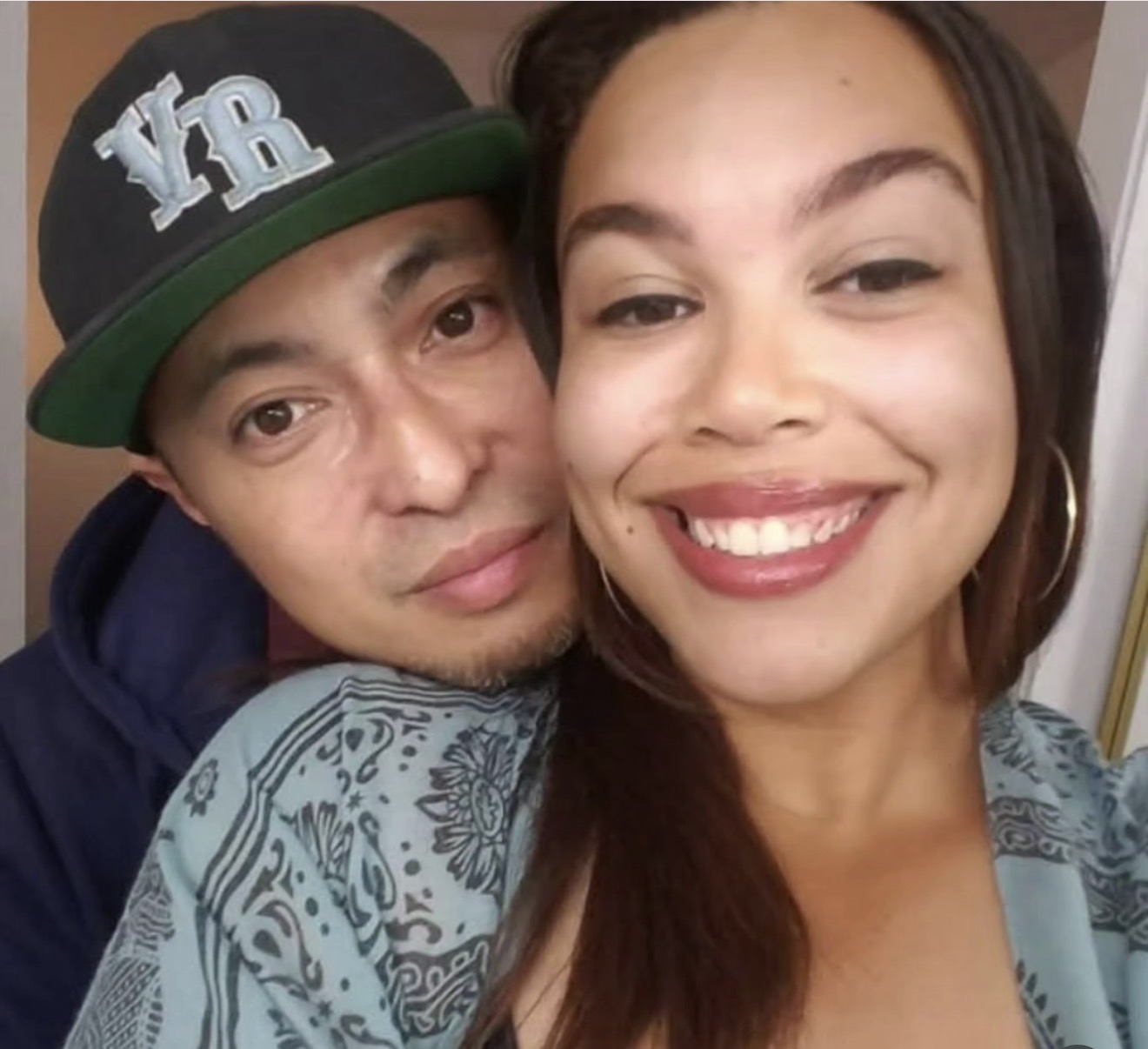
After 18 years of grinding, evolving, and learning when to stop chasing perfection, Vince Royale is finally allowing audiences to experience the comedian he’s become. Jerseypino may document one chapter of that journey, but Royale is already looking ahead—to new material, more specials, touring, television, film, writing, and whatever else comes next. For a comedian who spent nearly two decades preparing for his first special, the message now feels simple: Vince Royale is just getting started.