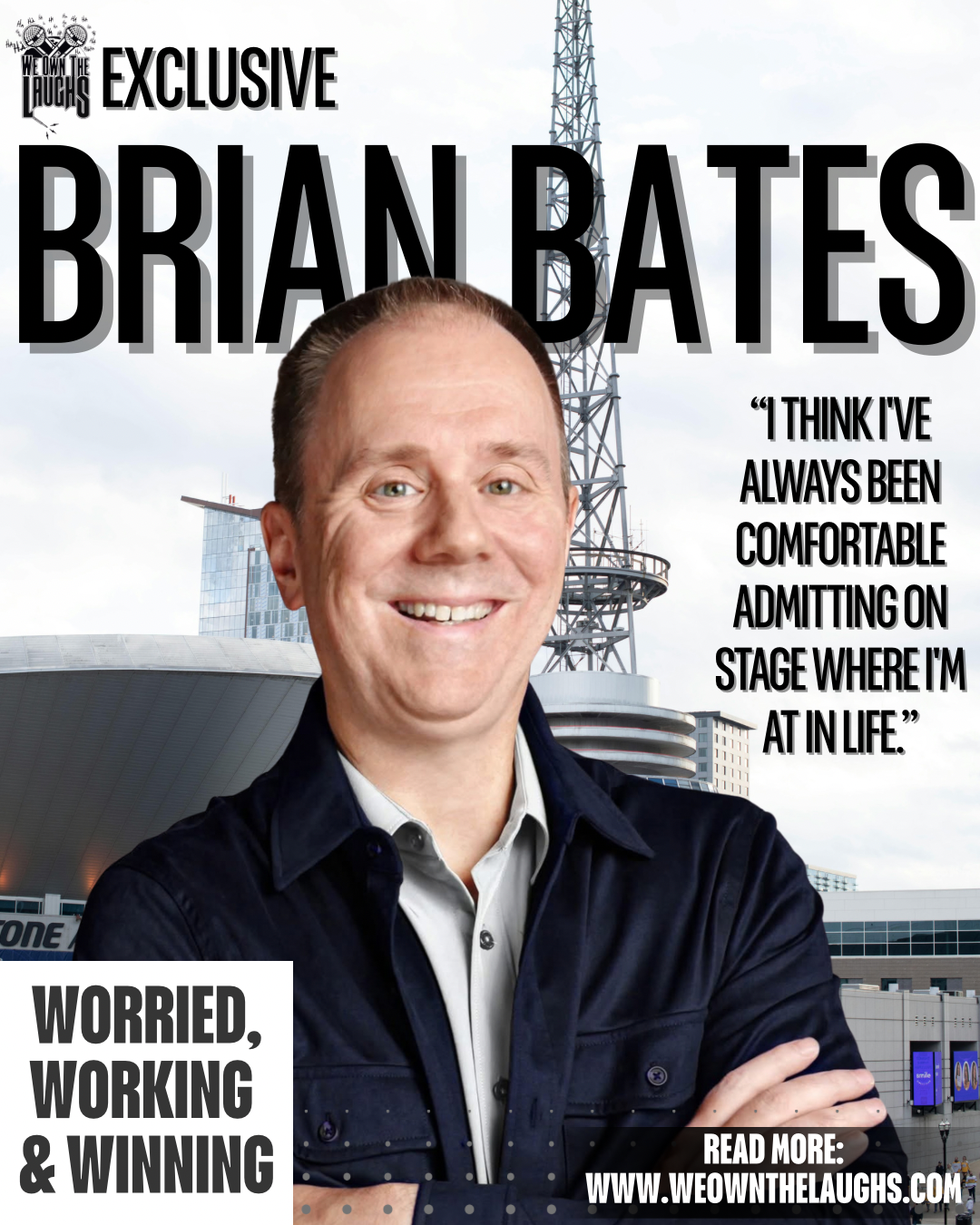
Brian Bates has the kind of face that suggests something has gone terribly wrong—even when everything is going pretty damn well.
He calls it his “Resting Worried Face,” making Worried an almost suspiciously perfect title for a comedy special built around a man who can find anxiety hiding inside marriage, fatherhood, aging, adulthood, and apparently any unexplained ache that sends him straight to the internet for a diagnosis. But Bates’ comedy isn’t simply about worrying; it’s about having enough life behind you to recognize how ridiculous the things consuming your attention can become.
His slow-and-steady approach to stand-up has also given him a perspective on longevity, opportunity, and surviving an industry increasingly obsessed with overnight success.
We Own The Laughs founder Tyson Paul caught up with Brian Bates to discuss Worried, finding comedy in becoming a husband and father later in life, what he’s learned from Nate Bargatze, navigating comedy’s viral era, stepping into acting, and why success apparently does absolutely nothing to stop a professional worrier from finding something new to worry about.
Your special is called Worried, but leaving a 20-year corporate career at 43 to become a comedian sounds like something a professional worrier would never do. How did the guy who overthinks everything convince himself to take the biggest gamble of his life?
(Laughs) That’s a good question. It definitely is not my norm. But I was ready for a career change. And I also was single at the time, so I thought, “If this doesn’t work out, I’m only hurting myself.” Plus, I don’t always worry. I just have what you call “Resting Worried Face”. So it looks like I’m always worried.
A lot of comedians build their first comedy special around who they want audiences to think they are. “Worried” feels more like an admission of who you actually are. Was there anything about yourself you became more comfortable admitting while building this hour?
No, I think I’ve always been comfortable admitting on stage where I’m at in life.
Between raising a four-year-old in your 50s, sleep apnea, dog therapy, potty-training disasters, and paying to remove a tree, when did you realize adulthood had somehow become funnier than anything you experienced when you were young and single?
I first started noticing it when I got married for the first time at age 48. A lot more happens when you’re married. And then once you have a child, the funny just accelerates. I didn’t get married, get a dog, and have a child late in life for the jokes, but it’s been a nice bonus..
Nate Bargatze has built Nateland into a platform that can now help comedians release projects without waiting for traditional Hollywood approval. After spending years alongside Nate, what have you learned from watching him go from fellow Nashville comic to someone capable of creating opportunities for an entire comedy community?
It’s been amazing to watch Nate’s ascension to the pinnacle of stand-up comedy. I have learned so much from him over the years. One thing I’ve learned is to look for opportunities to help up-and-coming comedians behind you. Quite frankly, I wouldn’t have a career if it weren’t for Nate. He’s given me so many opportunities over the years, from taking me on the road with him to putting me on his podcast, putting me in his movie, and producing my comedy special.
You spent six years helping host and produce Nateland Podcast. What did leaving that show teach you about separating your identity from something successful and having the confidence to build whatever comes next?
I didn’t really leave the Nateland Podcast as much as we just changed the name to The Public Figures Podcast when Nate left. But the format is essentially the same. We took no time off, so I don’t think I even had time to reflect on what this means for me.
You regularly perform at the Grand Ole Opry, one of the most historic stages in entertainment. What’s stranger to you: that stand-up comedy now belongs on the Opry stage, or that a former corporate employee named Brian Bates somehow ended up performing there?
(Laughs) They’re both pretty strange. But I’d have to say that a corporate employee named Brian Bates who didn’t try stand-up comedy until he was 35 and didn’t leave his job until he was 43 is the strangest. I would have never imagined performing at the Grand Ole Opry. It wasn’t even on my radar. But it’s such an honor every time I get to do it.
Comedy careers today can seemingly explode overnight from one viral crowd-work clip. As someone whose career was built slowly through clubs, road work, podcasting, and thousands of performances, is there something comedians lose when success arrives before experience does?
If I could have had my career explode immediately, I would have done it. So I’d be lying if I said I wasn’t jealous of the comedians who had immediate success. However, I’ve been in the business long enough to know that having a comedy career for the long haul is much more impressive than a short-term surge. I’ve seen many overnight sensations who couldn’t sustain their momentum because they just didn’t have the experience yet to make it in the comedy business. A slow build in comedy makes you appreciate every step along the way that much more and prepares you for when adversity comes your way.
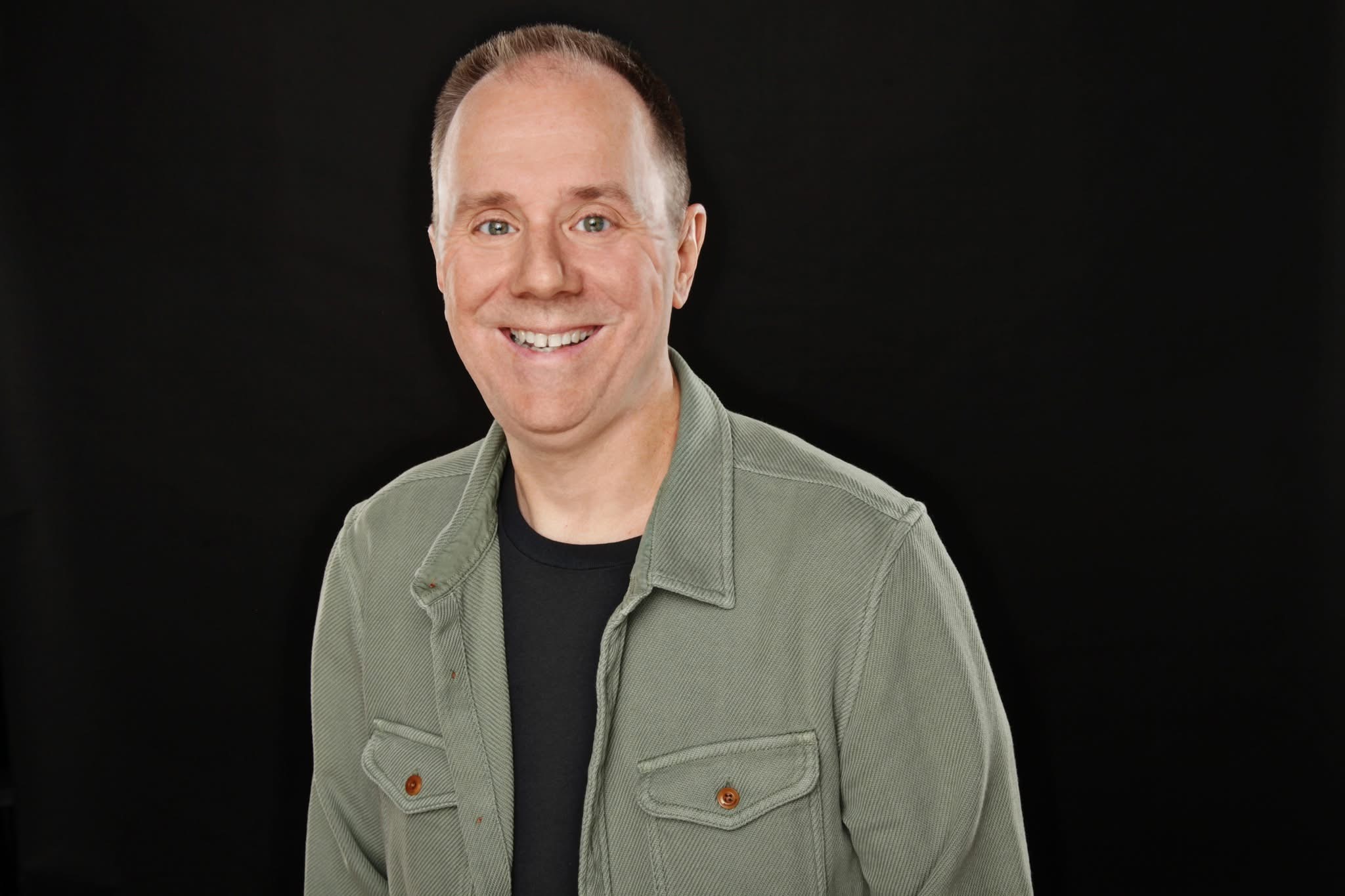
You’ve now stepped into acting with Sprung and Nate Bargatze’s The Breadwinner. Has acting exposed a side of you creatively that stand-up never could—or does being on a movie set simply give you an entirely new collection of things to worry about?
My roles in both Sprung and The Breadwinner were very small, but I really enjoyed being on set. I don’t remember being worried necessarily, but I was definitely nervous. Which I’m sure is kind of ridiculous for any real actor to hear since I literally had like one line. But it was like nothing I’d done before. I don’t know if it’s exposed a side of my creativity that stand-up never could, but I really enjoyed doing it. I hope I get to be in more roles in the future.
Imagine 43-year-old Brian is sitting in his corporate office debating whether quitting his job for comedy is the dumbest decision he could possibly make. You get exactly 30 seconds with him—but you’re not allowed to tell him how your career turns out. What do you say?
Every major decision can be the right one if you put in the work once you’ve made the decision.
You finally released a comedy special called Worried. The career gamble worked; you got married, became a father, performed at the Opry, and made it into movies. So what is Brian Bates worried about now?
I probably worry about my health more than I should. I’m a bit of a hypochondriac, and getting older does not help. I always have some new ache or pain that I diagnose online, which is never smart. I keep my doctor in business. Other than that, I just worry about balancing my busy work schedule with being a father and husband and being there for my family. I’m not sure if you were looking for a funny answer, but that’s the honest one.
For a comedian whose special is called Worried, Brian Bates has built a pretty convincing case for taking chances anyway.
His story isn’t about eliminating fear or magically figuring everything out—it’s about deciding, doing the work, and finding something funny when life inevitably gets weird. As Bates puts it, “Every major decision can be the right one if you put in the work once you’ve made the decision.”
These days, his worries have shifted toward health, balancing a busy schedule, and being present as a husband and father. Maybe that’s the real punchline of Worried: success doesn’t make the anxiety disappear—it just gives you better things to worry about.
And for Bates, thankfully, plenty more material.